Our IB research project exploring water distribution, the water cycle, and water challenges in Germany
📋 About This Project
This IB project explores global water distribution, why some regions have plenty while billions struggle to access clean water, with the 2021 Ahr Valley floods as a key case study showing how both excess and scarcity can devastate communities.
🌍 Global Water at a Glance
97%
of Earth's water is saltwater, only 2.5% is freshwater
2.1B
people lack access to safely managed drinking water (WHO/UNICEF, 2025)
72%
of global freshwater withdrawals go to agriculture (FAO)
700M
people could be displaced by water scarcity by 2030 (UN-Water)
Global distribution of water on Earth, saltwater vs. freshwater vs. accessible freshwater (Source: Wikimedia Commons / USGS)
🌊 Case Study: 2021 Germany Floods
In July 2021, record rainfall triggered catastrophic flooding across western Germany, turning the Ahr Valley into a disaster zone that exposed the human cost of inadequate climate adaptation.
Deaths
190 killed in Germany
134 in the Ahr Valley alone, more than all German inland flood deaths 1980–2020 combined
Source: NHESS/Copernicus, 2025
Displacement
17,000 lost their homes
3,000 of 4,200 buildings along the Ahr destroyed or severely damaged
Source: deutschland.de
Damage
€33 billion in damage
A €30 billion federal/state reconstruction fund was established
Source: Wikipedia / Clean Energy Wire
Warning failure
75% died outside hazard zones
Critical failures in early warning and evacuation systems exposed
Source: NHESS, 2025
Aftermath of the 2021 Ahr Valley flood, destroyed infrastructure and landscape (Source: Wikimedia Commons)
Areas affected by historical floods in the Ahrweiler district, the 2021 event far exceeded all previous flood extents
(Source: Copernicus Emergency Management Service / Wikimedia Commons)
Water Cycle
How water continuously moves through the Earth's systems
The complete water cycle: evaporation → condensation → precipitation → infiltration & runoff (Source: Wikimedia Commons / USGS)
💧 The Four Key Steps
☀️ Evaporation
Solar energy heats water in oceans, lakes and rivers, turning it into water vapour that rises into the atmosphere. Around 90% of atmospheric moisture comes from ocean evaporation.
☁️ Condensation
As water vapour rises, it cools and condenses around tiny dust or sea-salt particles, forming clouds and fog. This is the atmosphere's water storage phase.
🌧️ Precipitation
When water droplets in clouds combine and grow heavy enough, they fall as rain, snow, sleet or hail. The type depends on temperature at different altitudes.
🌱 Infiltration & Runoff
Water that reaches the ground either soaks into the soil (infiltration, replenishing groundwater) or flows across the surface (runoff) into streams and rivers, restarting the cycle.
🌿 Why the Water Cycle Matters
🌍 For the Environment
The water cycle sustains all ecosystems, from rainforests to wetlands. It regulates temperature, maintains river flows for aquatic biodiversity, and distributes nutrients across landscapes. Without it, life on Earth would be impossible.
👥 For Humans
Humans depend on the water cycle for drinking water, irrigation (70% of all water use), and hydroelectric power (16% of global electricity). Disruptions, through climate change or land use, directly threaten food security and energy supply.
Factors Affecting Water Distribution
What causes uneven distribution of fresh water, and what happens when it goes wrong
💨 3.1 Atmospheric Drivers, "The Natural Engine"
Precipitation Patterns
🌧️ Precipitation Patterns
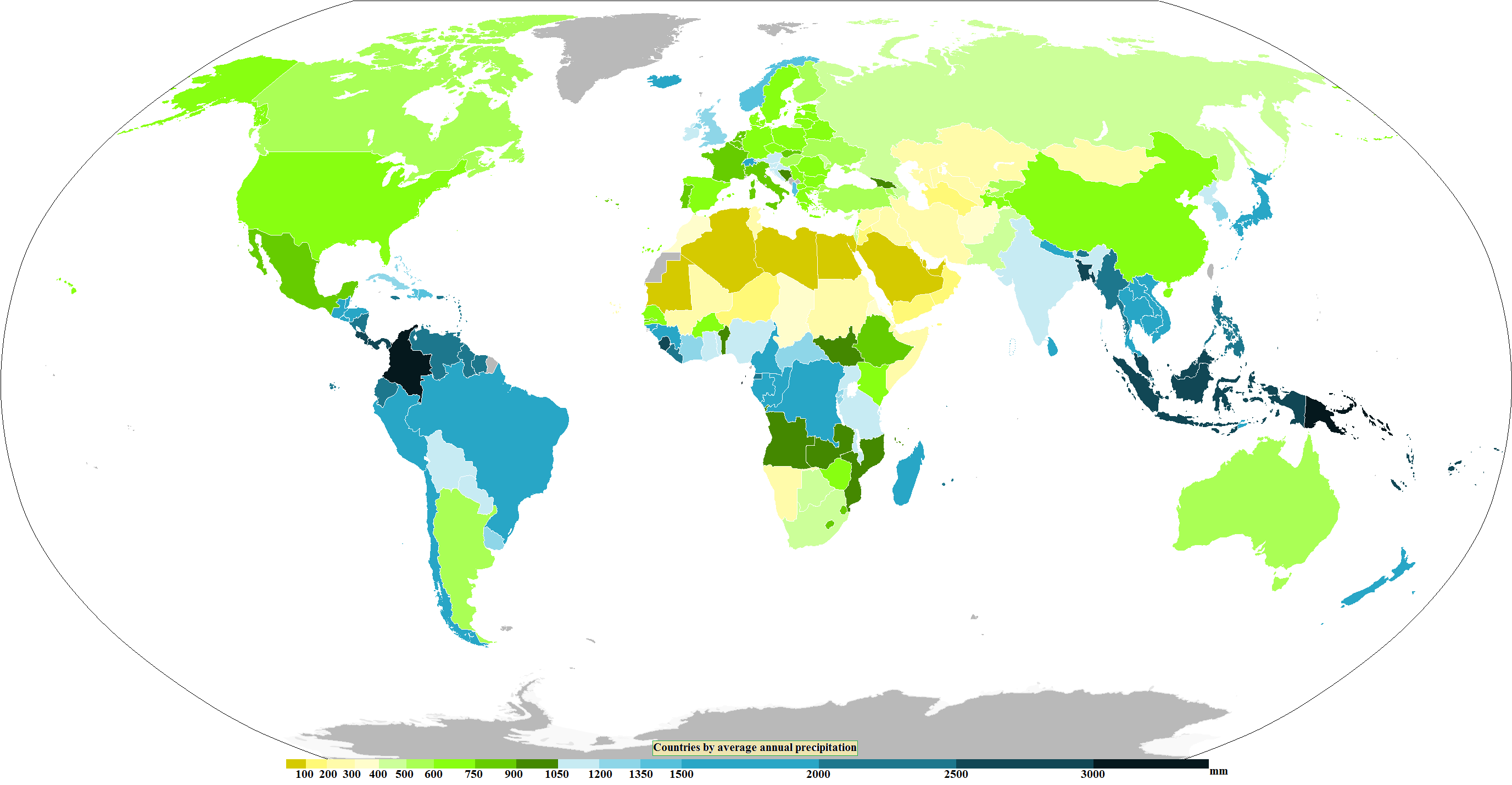
Global precipitation is highly uneven, the tropics receive over 2,000 mm/year, while deserts receive under 25 mm. Climate change is intensifying this divide, making wet regions wetter and dry regions drier.
Source: IPCC AR6 / Earth Rainfall Climatology
Average annual precipitation by country (Source: Wikimedia Commons)
Temperature & Evaporation
🌡️ Temperature & Evaporation
For every 1°C temperature rise, the atmosphere holds 7% more water vapour (Clausius-Clapeyron equation), accelerating the water cycle and intensifying both droughts and extreme rainfall events.
Source: WMO / UCAR
NASA global surface temperature anomaly map (Source: NASA / Wikimedia Commons)
Climate Change
🌐 Climate Change & Water
Half the global population already faces severe water scarcity for at least one month per year. Global lake evaporation is projected to increase by 16% by end of century.
Source: IPCC AR6 Synthesis Report, 2023
Projected changes in precipitation under climate change scenarios (Source: Wikimedia Commons)
Rivers follow drainage basins (watersheds). The Amazon basin drains 7 million km² and discharges 20% of all freshwater entering the world's oceans. Topography determines where water flows and collects.
Source: USGS / National Geographic
How a drainage basin collects and channels water (Source: Wikimedia Commons)
Geology & Soil
🪨 Geology & Soil Permeability
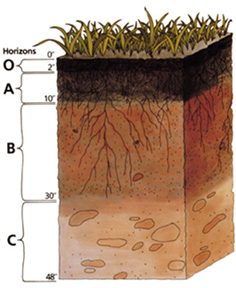
Sandy soils absorb 250+ mm/hour; compacted clay less than 1 mm/hour. Urbanisation (concrete, asphalt) reduces infiltration to near zero, dramatically increasing flood risk in cities.
Source: USGS Water Science School
Cross-section of a soil profile showing permeability layers (Source: Wikimedia Commons)
Groundwater
💧 Groundwater Aquifers
Groundwater is 30% of Earth's freshwater and supplies drinking water to 2 billion people. The Ogallala Aquifer (USA Great Plains) is being depleted 10–40× faster than it recharges naturally.
Source: USGS / UNESCO
Cross-section showing confined and unconfined aquifer systems (Source: Wikimedia Commons)
Glaciers
🧊 Glaciers & Ice Caps
Glaciers store 69% of Earth's freshwater and supply water to 2 billion people. Since 2000, glaciers have lost an average of 273 billion tonnes of ice per year, and the rate is accelerating.
🌊 3.3 Global Systems & Climate Extremes, "Large-Scale Regulators"
Ocean Currents
🌀 Thermohaline Circulation
The ocean conveyor belt takes 1,000–2,000 years per cycle and drives Western Europe's mild climate while influencing rainfall across Africa and Asia. Any slowdown from glacial meltwater threatens global weather systems.
Floods and storms account for 71% of all recorded natural disasters globally. Since 2000, floods have caused 104,000+ deaths. Weather-related disasters have increased five-fold over the past 50 years.
Source: WMO / UNDRR / Our World in Data
NASA satellite before/after imagery of the 2002 Elbe floods in Germany (Source: NASA / Wikimedia Commons)
🏗️ 3.4 Anthropogenic Factors, "The Human Element"
Water Management
🏗️ Dams & Water Management
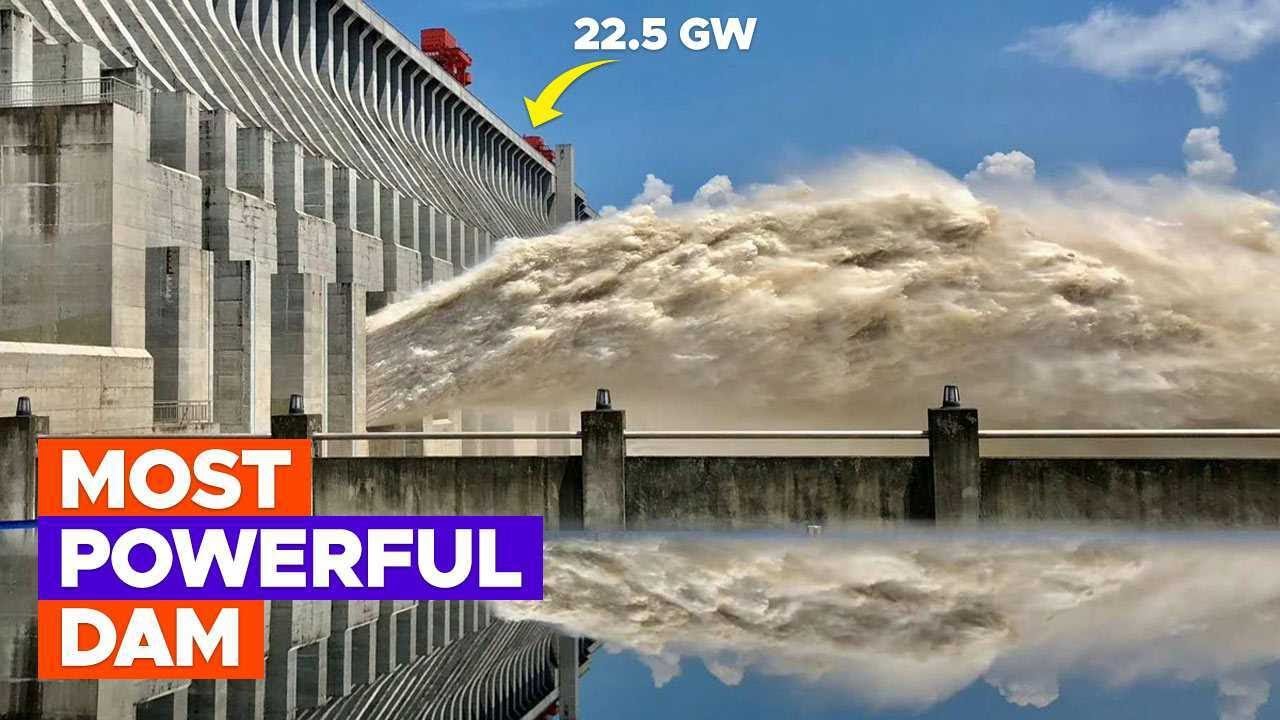
Over 58,000 large dams worldwide supply 16% of global electricity and store 10,000 km³ of water. China's Three Gorges Dam generates 100 TWh/year, more than any other power station on Earth.
Source: ICOLD / IEA
Aerial view of the Three Gorges Dam, world's largest hydroelectric dam (Source: Wikimedia Commons)
Infrastructure
🔧 Water Infrastructure
In developing countries, up to 40% of water leaks from pipes before reaching consumers. Ensuring universal access to safe water by 2030 requires an estimated $1.04 trillion investment in infrastructure.
Source: UNICEF / World Bank
Providing clean water infrastructure in a developing community (Source: Wikimedia Commons / USAID)
Policies
📜 Water Policies & Rights
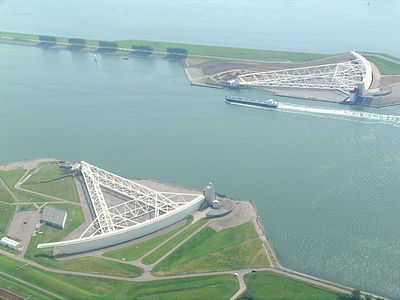
The UN recognised safe water as a human right in 2010, yet only 17% of countries have 75%+ of the funding needed to implement that right. The Netherlands' Delta Works (13 flood barriers) protects 4+ million people below sea level.
Source: UN-Water, 2026 / Wikipedia
🗺️ Interactive Flood Map: Ahr Valley 2021
Click a location
Select any marker on the map to see flood impact data.
Severely affected
Moderately affected
Rivers / Reference
Click any marker for flood impact data. Animated blue pulse shows the Ahr River flood surge on 14-15 July 2021.
The Maeslantkering, part of the Netherlands Delta Works flood defence system (Source: Wikimedia Commons)
Interview Ms. Szilvia
A conversation with Ms. Szilvia Szegedi about water, the water cycle, and Germany's water challenges
👤 About Ms. Szilvia Szegedi
Ms. Szilvia Szegedi is a teacher originally from Hungary. She has lived in Germany (Hamburg) and has personal experience with water infrastructure, including a visit to the Augsburg sewage treatment plant. She kindly agreed to be interviewed by us as part of this IB project on water distribution.
📝 Full Interview Transcript
Jonah
So, first question: where do you come from?
Szilvia Szegedi
I come from Hungary.
Jonah
And do you know anything about the water cycle?
Szilvia Szegedi
Yes, I assume that "water cycle" means, basically from the words, how rain falls down from the clouds, then sinks into the ground, and then comes back up from the ground through plants and water bodies on the surface. Yes, I think so. And then it goes back through moisture absorption, or what is it called?
David
Evaporation.
Szilvia Szegedi
Evaporation, I think. Yes, evaporation brings it back up into the clouds. I assume that's what it means.
Jonah
Okay. Have you ever had problems in your life with fresh water, or maybe muddy/dirty water or something like that?
Szilvia Szegedi
Once in a while, after the cleaning of the entire sewage system, it gets a bit dirtier or cloudy. But here in Eastern Hungary, it's a tradition: it is always announced. Cars drive down the street with loudspeakers to notify the population, so otherwise, no. Though maybe once in Romania, I experienced that everyone said you shouldn't drink the tap water, but rather buy bottled water, whether in plastic or glass bottles, to drink.
Jonah
Okay. What do you use water for at home?
Szilvia Szegedi
Of course, I mostly use it for drinking and cooking. We also water the plants in the garden. We have a drilled well in the garden, not a dug well. It was drilled down to a depth of, I don't know, 50 to 80 meters. And we get water from there for watering the garden. That's what we use it for.
Jonah
Okay. Have you heard about the floods in Germany in 2021?
Szilvia Szegedi
I heard about it, but unfortunately, I don't know an awful lot about it. I assume it happened in Northern Germany. To be honest, I wouldn't even be able to tell you the exact date anymore.
Jonah
So, did you ever have any water issues in Germany when you lived there?
Szilvia Szegedi
I lived in Hamburg for half a year, and I didn't have any problems with water there. Actually, wherever I went, there were no issues. Even on the train, there was always water to wash your hands. So honestly, I experienced no problems at all.
Jonah
Do you think that everyone in Germany should have, or does have, equal access to fresh water?
Szilvia Szegedi
I assume that everyone does. I hope so, and actually, I'd say I'm convinced that everyone does, even refugees, the poorer classes, or the residents of apartment blocks in big cities. I think everyone, even the poorer demographics, has access to water. I hope so; this isn't Africa or, I don't know, the Orient or something like that.
Jonah
And lastly, have you ever had any experiences with water infrastructure, like wastewater treatment plants or something similar?
Szilvia Szegedi
Yes, it was an interesting experience for me to see the sewage treatment plant of the city of Augsburg and its surroundings. I went there with a group of students, and we walked a bit along the rivers, canals, and streams around Augsburg. It was interesting to see how the water is treated there, and how they use water from the Alps. It is located near the foothills, a bit further out from the foothills of the Alps, and that is an important water source. The streams and the waters coming from the mountains, how that is used, how it is stored, and how it is then purified. So, that was a really interesting thing.
Jonah
Yes, and I think that's it. Thank you.
David
Thank you very much for the interview.
Szilvia Szegedi
Yes, you're welcome. 🙂
💡 Key Insights from the Interview
✅
Germany = High Water AccessMs. Szegedi confirmed that in her experience living in Hamburg, water access was universal and reliable, even on public transport.
🌍
Regional VariationHer experience in Romania contrasted sharply, where locals advised against drinking tap water. This illustrates unequal distribution even within Europe.
🏭
Water InfrastructureHer visit to Augsburg's treatment plant highlights how modern infrastructure purifies and distributes alpine meltwater, a vital but often invisible system.
💧
Private Water SourcesHer family's 50–80m drilled well for garden irrigation shows how private groundwater extraction is common in rural Central Europe.
Solutions
How can we protect and better distribute the world's fresh water resources?
🌊 Case Study: Rebuilding After the 2021 Floods
Germany, Post-2021
Ahr Valley Reconstruction
Following the catastrophic 2021 floods (190 deaths, €33B damage), Germany established a multi-layered response that became a model for climate-resilient rebuilding:
€30 billion reconstruction fund, joint federal/state programme for infrastructure, housing and businesses
Improved early warning systems, new sirens, cell broadcast alerts and mandatory flood risk communication
Floodplain restoration, relocating buildings away from flood zones; river corridors widened for natural flooding
KAHR Research Programme, government-funded science integrating flood risk data into all reconstruction decisions
Climate-adapted infrastructure, bridges, roads and utilities designed for projected 21st-century flood levels
Sources: BMBF / deutschland.de / Clean Energy Wire
"The floods showed us that technical flood protection alone is not enough. We need engineering combined with natural solutions, better early warning, and communities that are genuinely prepared."
, German post-flood reconstruction report, 2022
🏢 4.1 Companies & Technology
Water Tech
Xylem Inc. (USA)
Pumps, smart meters, UV disinfection, digital water management in 150+ countries
Products help utilities reduce leakage and monitor water quality in real time. Serves 500+ million people.
Water Services
Veolia (France)
World's leading water services company, manages water for 95+ million people globally
Operates desalination, membrane filtration and wastewater treatment plants in water-stressed regions.
Pump Technology
Grundfos (Denmark)
Pumps ~1 in 4 litres of circulated water globally; energy-efficient smart pump systems
Revenue ~$4.2B/year. Focus on sustainable pumping technology to eliminate water stress.
🏛️ 4.2 Government Level
Netherlands
Delta Works
13 flood barriers built after the 1953 flood (1,836 deaths). Protects 4+ million people living below sea level.
The ongoing Delta Programme updates flood defences annually and plans for climate scenarios to 2100.
Singapore
NEWater Programme
Reclaimed wastewater treated via reverse osmosis meets 40% of national water demand
Target: 55% of demand from NEWater by 2060. Passed 150,000+ scientific tests, a global model for water circularity.
Germany
Post-2021 Flood Policy
€30 billion reconstruction fund; new early warning systems and floodplain restoration
The KAHR research programme integrates scientific flood risk management into reconstruction of the Ahr Valley.
🤝 4.3 NGOs & Community Action
NGO
charity: water
100% of public donations fund clean water projects. Has reached 17 million people across 29 countries via wells, springs, and biosand filters. Partners with 200+ local organisations.
charitywater.org
NGO
WaterAid
Operating in 30 countries, WaterAid has reached 29+ million people with clean water and 27.8 million with sanitation. Advocates for water as a human right at policy level.
wateraid.org
👤 4.4 Individual Actions
Small daily habits add up. Here are 5 actions anyone can take, with the numbers to prove it:
🚿
Shorter showers (−5 min) Saves 900+ litres per person per year. A 5-minute shower uses ~40L vs. 10 minutes at ~80L. (EPA)
🦷
Turn off the tap while brushing A running tap wastes 5–15 L/min. Turning it off saves up to 8,760 litres/year per person. (Waternet / EPA)
🔧
Fix leaking taps promptly A tap dripping once per second wastes over 11,000 litres/year, enough to fill a garden pond. (US EPA WaterSense)
🍽️
Run full dishwasher & washing machine loads A full-load dishwasher uses 10–15L vs. up to 100L for hand-washing. Running full loads cuts household water use by 20%. (Energy Saving Trust)
🌧️
Collect rainwater for garden use A water butt can collect 24,000+ litres/year from roof runoff. Watering plants at dawn reduces evaporation loss by up to 50%. (UK Environment Agency)
Knowledge Quiz
Test what you know about water distribution and the 2021 Germany floods
Question 1 of 7Score: 0
🎉
Sources & Bibliography
All references used in this IB research project
📚
MLA / Academic Citation Format
All sources are listed below in the order they were used. Web sources were accessed in 2024–2025.
🔬 Scientific & Peer-Reviewed Sources
1
Causes of the exceptionally high number of fatalities in the Ahr valley, Germany, during the 2021 flood
Thieken, A. H. et al., Natural Hazards and Earth System Sciences, Vol. 25, pp. 581–610, 2025
A multi-disciplinary analysis of the exceptional flood event of July 2021 in central Europe – Part 2: Historical context and relation to climate change
Mohr, S. et al., Natural Hazards and Earth System Sciences, Vol. 23, pp. 1287–1311, 2023
Exploring water stress levels by region and how freshwater access varies dramatically across the globe
🌍 Water Stress by Region
Extreme
Middle East & North Africa
💧 88% access to safe water
The world's most water-stressed region. Arid climate, rapid population growth, and heavy groundwater over-extraction create a severe crisis.
High
Central Asia
💧 72% access to safe water
Shrinking rivers and glaciers, poor irrigation infrastructure, and increasing demand from agriculture drive high water stress.
High
South Asia
💧 77% access to safe water
Home to 1.8 billion people. Seasonal monsoons create feast-or-famine cycles; groundwater depletion is accelerating.
Medium-High
Mediterranean Europe
💧 95% access to safe water
High overall access, but southern regions face growing water stress from droughts, tourism pressure, and climate change.
High
Sub-Saharan Africa
💧 31% access to safe water
The lowest safe water access globally. Rapid urbanisation, poor infrastructure, and climate variability compound the crisis.
Medium
Southeast Asia
💧 71% access to safe water
Heavy rainfall but uneven distribution. Rapid industrialisation and pollution threaten freshwater quality significantly.
Medium
East Asia
💧 92% access to safe water
Good overall access, but unequal distribution between urban and rural areas. River pollution remains a major challenge.
Low
North America
💧 98% access to safe water
Among the best-served regions globally. However, some indigenous communities and southwestern states face growing scarcity.
Low
Northern Europe
💧 99% access to safe water
Excellent water infrastructure and abundant freshwater resources. Germany, the UK, and Scandinavia lead in water management.
Low
South America
💧 87% access to safe water
The Amazon Basin holds vast freshwater reserves. However, deforestation and urban inequality limit access in many areas.
Low-Medium
Oceania
💧 67% access to safe water
Australia faces frequent droughts; Pacific island nations are threatened by saltwater intrusion from rising sea levels.
Medium
Central Africa
💧 45% access to safe water
Rich in freshwater resources but poor infrastructure means many cannot access clean water. The Congo Basin is the world's second-largest river system.
📅 2021 Ahr Valley Flood — Timeline
🌧
July 12, 2021
Heavy Rainfall Begins
Persistent low-pressure system brings record rainfall to western Germany and Belgium. Up to 100mm in 24 hours, equivalent to a month's worth of rain in a single day.
⚠️
July 14, 2021
Rivers Begin to Overflow
The Ahr, Erft, and Rur rivers breach their banks. Evacuation orders issued but many cannot escape in time as roads and phone networks are overwhelmed.
🌊
Night of July 14–15, 2021
The Peak — Catastrophic Flooding
Ahr River rises 8–9 metres above normal level — heights never recorded in its history. Entire villages swept away. Emergency services overwhelmed. Power and communications cut.
🚨
July 15 Morning, 2021
Disaster Declared
German federal government declares disaster zone. Bundeswehr (army) deployed for rescue operations. 1,300+ people reported missing. Helicopter rescues underway across flooded villages.
💔
July 16–20, 2021
Counting the Cost
Death toll confirmed at 134 in Ahr Valley, 190 total in Germany. 42,000 people displaced. €33 billion in damage. Entire communities left without clean water, power, or road access.
🔨
August 2021 Onward
Recovery Begins
International aid pours in. Reconstruction estimated to take 10+ years. Climate scientists formally link the event to global warming, finding it made such floods 1.2–9 times more likely.
Data & Charts
Visualising global water distribution statistics, regional access data, and historical flood impacts
📊 Key Global Statistics
2.2B
People lack access to safe drinking water globally
3.6B
People face water scarcity at least 1 month per year
80%
Of wastewater flows back to environment untreated
+55%
Projected increase in global water demand by 2050
📈 Charts
🌊 Global Water Distribution
💧 Deaths from Flood Events in Germany (Selected Years)
🌍 Access to Safe Drinking Water by Region (%)
📝 Reflection
Individual Service as Action Reflection — David & Jonah — Science Unit 4
🔵David
🟢Jonah
01
Why is water scarcity not only a "natural problem" but also an ethical, economical and political one?
🔵
David
Water scarcity is not only a natural problem because water scarcity can be made by corporations like coca cola for example the city in Argentina doesn't have much water but has plenty of coca cola because the company is using all of the groundwater for themselves which also pollutes rivers with coca cola plastic bottles which the river could have been used to give freshwater to the residents.
🟢
Jonah
Coke is one of big megacorporations that use insanely much of human fresh water. They use more water for one bottle than it normally needs. For one liter of coke they use around 1.5-2 liters of water. We could also use the rest of that water to help the starving and dried out kids in Africa. It affects economies by using more water than what people could use to survive and the water prices also go up because of these problems. The same also happens with farming. It uses more water every day and makes the prices go up. Politics are also having problems. Governments have to be more strict with the water uses and have to think about who should get water supplies and who not.
02
How did your interview with the ISD teacher change your understanding of water distribution? Compare the water challenges of that country with the water reality you experience here in Debrecen, Hungary.
🔵
David
My interview with Miss szilvia changed my understanding because i thought that at least some people living in Germany had some issues with water distribution but it turns out that she had no issues at all with water during her stay in Germany but we personally recently had some issues with water because our nice landlord had the house registered as something that made the water so expensive that our water bill was WAAYY higher than it should have been and even our neighbour said that this was unusual because they used more water than us and paid less than us.
🟢
Jonah
Well we interviewed our teacher more about water in Germany and not really globally. But I came here and learned about the machines that clear the water in the countries. Ms.Szilvia was in augsburg and went to one of them. She really got interested and asked questions. We didn't really get much information about this though. She was thinking about how some things got into that and all the pollution. Yes, pollution is not just in oceans but also on land. Here in Hungary there are not any oceans but at Balaton they have the biggest lake in middle Europe. The balaton is also getting polluted and some people say that you should rather not swim in the places.
03
While habits such as "turning off the tap while brushing your teeth, or taking shorter showers" are good, are they enough to solve a systemic water crisis?
🔵
David
They would not be enough to solve a systemic water crisis because a person turning off the tap water while brushing their teeth would suddenly equal someone without water having water to actually solve water problems. We would need to actually get water to people in need of it instead of just saving the tap water.
🟢
Jonah
If all or most of the people would stop with letting on tabs or having long showers it could affect our water problems in a positive way. One shower is around 30-60 liters based on the shower. But if you shower for just around 3-5 minutes it would be only half. To compare a human drinks around 2.7 liters a day. That is 1/100 of a shower. So yes I think that it can affect our water problems on earth.
04
Based on your research on infrastructure (such as greywater systems, drip irrigation or xeriscaping) what is the difference between a small daily habit and a truly impactful solution?
🔵
David
A true impactful solution would be actually getting water to people needing it by building water infrastructure where there is none and making regulations for large companies to not just be able to suck all of the groundwater out of the water reservoirs for themselves just to sell it at a cheaper price than water in the regions where people can't get to water.
🟢
Jonah
Small daily habits matter, but they often produce incremental savings. Infrastructure changes alter the system itself, so benefits occur automatically, continuously, and often for many years without requiring ongoing effort.
05
Be completely honest: Has your daily behavior regarding water, food waste, or plastic consumption changed since we began this unit? If not, what is stopping you from making a real change?
🔵
David
My water usage didn't change because I personally believe that small habits wouldn't impact the world at all and would should i as a grade 7 student ACTUAILLY change we could raise awareness but that it.
🟢
Jonah
I already started a long time ago to focus on these things like saving water. Maybe that's also because I don't drink that much. But I really don't shower long, leave the tap on when I brush my teeth. I really don't focus on it, it is just like a habit for to do this things.
06
How does your website raise awareness within the ISD community?
🔵
David
Our website raises awareness because it shows how destructive a climate change can be by causing massive floods that can kill people like firefighter and the thw pumped out a basement and found some drowned in there.
🟢
Jonah
Our website uses pictures, graphs and also a little bit of writing to show people what they did wrong and what they could change. We show the damage that they have done to make them think about their actions. We really wanted to show that what we did was wrong and did affect nature.
07
Based on everything you have learned, researched, shared and heard from your interviewed teacher, write a realistic and high impact commitment that you will implement in your life to balance the water cycle and protect our environment.
🔵
David
I dont think that i will implement new things because the thing is only me alone doing something wont change anything at all like sure our water bill is going to be a cent lower but that is It just don't see why me alone as a single person would have any impact at all.
🟢
Jonah
With Ms.Silvia we didn't really talk about what we could do better but we did think about it after the interview and I think that even though I don't really use that much water in the day I could still improve like not use too much water on the plants and maybe shower shorter.